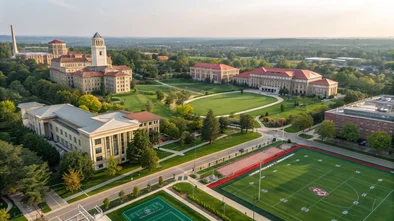
Unlocking Your Future: Top Undergraduate Health Science Courses at UFS
The University of the Free State (UFS), a beacon of academic excellence in South Africa, offers a robust and comprehensive array of undergraduate health science programmes designed to equip aspiring healthcare professionals with the knowledge, skills, and ethical grounding needed to excel in a dynamic global healthcare landscape. For students passionate about making a tangible difference in people's lives, a career in health sciences can be incredibly rewarding. UFS stands out for its cutting-edge research, state-of-the-art facilities, and a commitment to producing graduates who are not only clinically competent but also compassionate and community-focused. This detailed guide explores the top undergraduate health science courses available at UFS, providing insights into their admission requirements, curriculum highlights, and the diverse career prospects they open up. Whether your ambition is to become a doctor, a medical researcher, an optometrist, or a physiotherapist, UFS offers a pathway to achieve your dreams.
Why Choose Health Sciences at UFS?
UFS's Faculty of Health Sciences is renowned for its interdisciplinary approach, fostering an environment where students gain a holistic understanding of health and disease. The faculty prides itself on its strong links with local and regional healthcare institutions, providing students with invaluable practical experience and exposure to real-world medical challenges. A dedicated team of expert lecturers and researchers, coupled with modern teaching methodologies, ensures that students receive a world-class education. Furthermore, the university's commitment to community engagement means that many programmes integrate outreach initiatives, allowing students to contribute meaningfully to society even before graduation. Choosing UFS means becoming part of a vibrant academic community dedicated to innovation and service in health.
Featured Programmes: A Closer Look
UFS offers a diverse portfolio of health science degrees, each designed to address specific aspects of healthcare. Below, we delve into some of the most sought-after programmes, outlining their unique features and what it takes to get in.
Bachelor of Medicine and Bachelor of Surgery (MB ChB)
The MB ChB programme at UFS is a highly competitive and rigorous six-year undergraduate degree that prepares students for a career as a medical doctor. This comprehensive programme covers a vast range of medical disciplines, from basic sciences and anatomy to clinical rotations in various specialties like surgery, paediatrics, internal medicine, and obstetrics and gynaecology. The curriculum is designed to foster critical thinking, problem-solving skills, and a strong ethical foundation, essential for medical practice. Graduates are eligible to register with the Health Professions Council of South Africa (HPCSA) for their internship and community service year, leading to independent practice.
- Admission Requirements: This programme requires an exceptionally strong academic record. Applicants typically need a minimum Admission Point Score (APS) of 36, calculated based on the National Senior Certificate (NSC) results.
- Subject Requirements: Compulsory subjects include Mathematics, Physical Sciences, and Life Sciences, all at a high level of achievement (typically Level 5 or 6 and above). English is also essential.
- Selection Process: Admission is highly selective and involves more than just academic scores. Shortlisted candidates are usually invited for an interview, which assesses their communication skills, empathy, critical thinking, and suitability for the demanding medical profession. The National Benchmark Test (NBT) is also a crucial part of the selection process.
Career Prospects: A degree in MB ChB opens doors to a vast array of medical specialisations, including general practice, surgery, cardiology, neurology, paediatrics, psychiatry, and many more. Medical doctors can work in public or private hospitals, clinics, research institutions, or even pursue careers in medical administration or public health.
Bachelor of Medical Science (B.Med.Sc)
The Bachelor of Medical Science is an excellent choice for students interested in the scientific foundations of medicine, research, and laboratory work, rather than direct clinical practice as a doctor. This three-year degree programme delves deep into the biological and medical sciences, providing a strong theoretical and practical grounding. Students can often specialise in various fields:
- Physiology: Understanding how the human body functions at cellular and systemic levels.
- Anatomy: Detailed study of the structure of the human body.
- Pharmacology: The study of drugs and their effects on biological systems.
- Human Genetics: Exploring the role of genes in health and disease.
- Medical Biochemistry: Chemical processes within living organisms.
Admission Requirements: A minimum APS of 30-32 is generally required, with strong performance in Mathematics, Physical Sciences, and Life Sciences. While slightly less competitive than MB ChB, it still demands a solid academic background.
Career Prospects: Graduates often find roles in medical research institutions, pharmaceutical companies, forensic science laboratories, biotechnology firms, or as medical sales representatives. It also serves as an excellent foundation for postgraduate studies, including Honours, Master's, and PhD degrees, or even a second degree in a clinical field.
Other Prominent Health Science Programmes at UFS
UFS offers a wide range of other equally vital health science degrees, many of which also require an APS of 36 or above, alongside specific subject requirements and often a selection process involving interviews or additional assessments. These programmes prepare students for crucial roles in multidisciplinary healthcare teams:
- Bachelor of Optometry (BOptom): A four-year programme focused on eye care, including diagnosing and treating visual problems, prescribing corrective lenses, and detecting ocular diseases. Requires a high APS (typically 36+) and strong performance in Mathematics, Physical Sciences, and Life Sciences.
- Bachelor of Dietetics (BDiet): A four-year degree training professionals in nutrition science and dietary management for health and disease. This programme usually requires an APS of 36+, with good passes in Mathematics, Physical Sciences, and Life Sciences.
- Bachelor of Occupational Therapy (BOccTher): A four-year programme that teaches how to help individuals of all ages overcome physical, developmental, emotional, or mental challenges to participate in daily activities. Requires an APS of 36+ and strong performance in Mathematics, Physical Sciences, and Life Sciences.
- Bachelor of Physiotherapy (BPhysT): A four-year degree focused on physical rehabilitation, injury prevention, and health promotion using various physical methods. Typically requires an APS of 36+, with strong performance in Mathematics, Physical Sciences, and Life Sciences.
- Bachelor of Nursing (BNur): A four-year programme preparing registered nurses to provide comprehensive patient care across various healthcare settings. Requires a good APS (often 30+), with Life Sciences and English being particularly important.
- Bachelor of Social Work (BSW): While not strictly a health science, social work plays a critical role in the holistic health and well-being of individuals and communities, often working in conjunction with healthcare teams.
For all these highly competitive programmes, meeting the minimum APS and subject requirements does not guarantee admission. The selection processes are rigorous, often involving additional tests (like the NBT), essays, and interviews to assess a candidate's suitability, empathy, communication skills, and commitment to the profession.
General Admission Requirements and Application Tips
While specific requirements vary by programme, a general overview of what UFS looks for in health science applicants includes:
- High Academic Standing: An excellent matriculation certificate (NSC), particularly in core subjects. Most health science programmes demand an APS of at least 30-36.
- Strong Performance in Key Subjects: Mathematics, Physical Sciences, and Life Sciences are almost universally required at high levels. English proficiency is also crucial.
- National Benchmark Test (NBT): The NBT is mandatory for most health science programmes at UFS. These tests assess academic literacy, quantitative literacy, and mathematical proficiency. Performing well in the NBT can significantly boost your application.
- Early Application: Health science programmes are highly sought after. Apply as early as possible in your matric year to increase your chances.
- Prepare for Selection: If a programme includes interviews or additional assessments, prepare thoroughly. Research the field, practice communication skills, and reflect on why you want to pursue a career in health.
- Extracurricular Activities & Volunteering: While not always explicitly stated, involvement in community service, healthcare-related volunteering, or leadership roles can demonstrate your commitment and suitability for a caring profession.
Career Prospects in Health Sciences
A degree in health sciences from UFS opens up a world of opportunities in a rapidly expanding and evolving sector. The skills and knowledge gained are highly transferable and in constant demand globally. Career paths are incredibly diverse and can include:
- Clinical Practice: Working directly with patients as a doctor, nurse, physiotherapist, occupational therapist, optometrist, or dietitian in hospitals, clinics, or private practice.
- Research and Development: Contributing to medical breakthroughs in university labs, pharmaceutical companies, or government research institutions.
- Public Health: Working to improve community health through policy development, disease prevention programmes, and health education in governmental or non-governmental organisations.
- Health Administration and Management: Overseeing the operations of healthcare facilities, managing public health initiatives, or working in health policy.
- Education: Training the next generation of healthcare professionals in academic institutions.
Conclusion
Pursuing an undergraduate degree in health sciences at the University of the Free State is an investment in a rewarding and impactful future. The UFS Faculty of Health Sciences is dedicated to nurturing skilled, ethical, and compassionate professionals who are ready to tackle the complex challenges of modern healthcare. With its comprehensive programmes, rigorous academic standards, and focus on practical experience, UFS provides an exceptional foundation for a successful career. If you possess a strong academic record, a genuine desire to serve others, and a passion for scientific inquiry, UFS's health science offerings could be your perfect starting point. Research your chosen programme meticulously, meet the admission requirements, and prepare to embark on a transformative educational journey that will empower you to make a significant difference in the world.